Startical: why transoceanic flights will become safer and more efficient
6 reading time
Why was Startical created? Global communications and the precise positioning of aircraft are essential to guaranteeing air traffic safety. However, when an aircraft flies over remote or oceanic areas, it can enter regions where these services simply do not exist.
For more than 50 years, Indra has been one of the global leaders in air traffic management. Today, it is driving a technological revolution capable of guaranteeing these services in oceanic airspace, which currently lacks land‑based coverage.
How? By taking into space to ensure the same levels of safety and efficiency for transoceanic flights.
What are ‘CNS’ technologies?
Air Traffic Management (ATM) ensures that the more than 100,000 flights operated worldwide every day do so safely and efficiently. ATM relies on Air Traffic Services (ATS), which are responsible for managing the operation of all these flights.
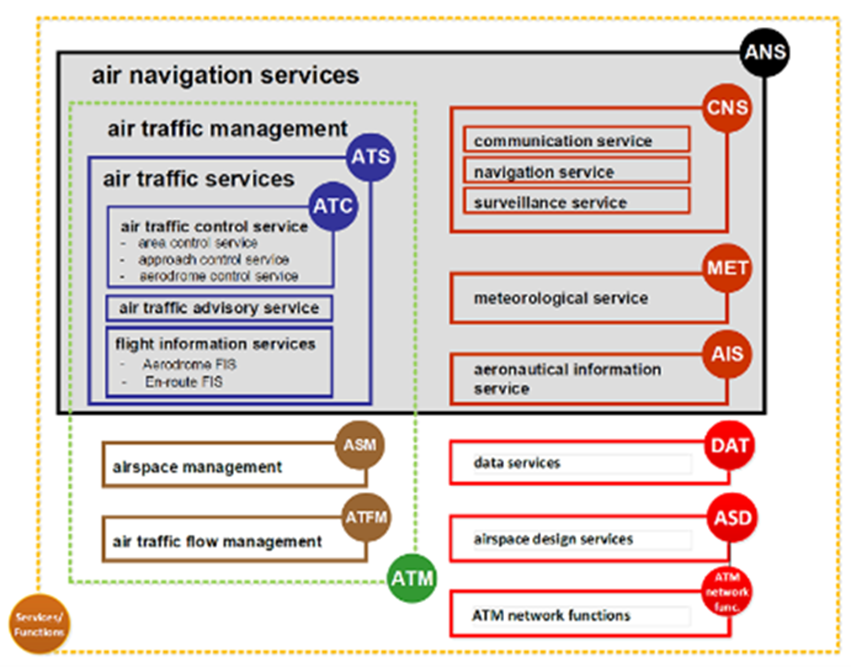
ATS services are supported by CNS systems—Communication, Navigation and Surveillance—used directly by air traffic controllers and pilots:
- Communication (C): voice and/or data communications between controllers and pilots.
- Navigation (N): systems assisting aircraft guidance, such as VOR, DME or ILS radio aids.
- Surveillance (S): systems like radar, enabling controllers to know precisely where each aircraft is located.
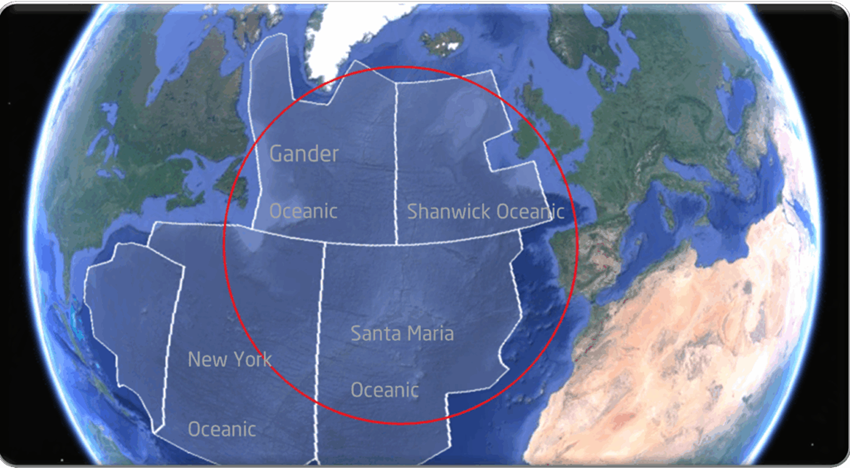
CNS systems are deployed on the ground, providing full coverage across continental airspace—typically between 150 and 250 NM. This means they are not available, or only partially available, over oceanic regions.
Because of this lack of coverage, aircraft separation standards over the oceans are higher than over land, where flight operations can be far more optimised. With global air traffic expected to grow in the coming years—and with the aviation sector’s commitment to greater sustainability—there is a clear need for a solution that covers oceanic airspace and prevents future capacity bottlenecks.
The aviation industry does not evolve technologically at high speed, and deploying major innovations—ensuring they work safely on all aircraft—tends to take time.
This is why the Space‑Based CNS initiative has emerged: to move CNS systems into space through a constellation of low‑Earth‑orbit satellites. The aim is to extend CNS services to oceanic regions without requiring any changes to existing aircraft avionics, thereby enabling route optimisation across those areas.
Startical: the solution developed by Indra Group and ENAIRE
To make this initiative a reality, Indra Group—technology partner—is collaborating with ENAIRE—operational partner—to create Startical.
Startical is a public‑private company driven by Indra Group and ENAIRE, the Spanish national air navigation service provider. Approved by the Spanish Council of Ministers in 2022, the initiative will position Spain as a global leader in space‑based air navigation services.
Startical aims to develop, deploy and operate a constellation of more than 200 satellites in low‑Earth orbit, specifically designed for air traffic management. This new infrastructure will greatly enhance global air traffic management by extending CNS coverage across vast oceanic or remote regions currently without terrestrial navigation systems.
The joint venture between ENAIRE and Indra Group will be the first to offer a satellite platform combining aircraft position surveillance (ADS‑B) with VHF radio communication between controllers and pilots—fully aligned with aeronautical standards. This unique approach will deliver greater safety, capacity, efficiency and punctuality for flights worldwide, benefitting airlines and passengers alike. It will also facilitate the creation of new routes, helping reduce operational costs and CO₂ emissions.

Startical launched its first demonstration satellites, IOD‑1 and IOD‑2, in 2025. With these two demonstrators, Startical has validated its technology in orbit and is now moving towards the full deployment of the constellation. To date, it has carried out successful trials involving various ANSPs and airlines operating real traffic, and is preparing to strengthen its position as a leader in technological innovation within the aerospace sector.
The functional trials were conducted in the South Atlantic corridor, in collaboration with air navigation service providers ENAIRE, NAV Portugal, ASA, ASECNA and DECEA, as well as airlines such as Air Europa, Iberia, TAP Air Portugal, Plus Ultra and Vueling.
How did the initiative begin?
With support from European funding under the SESAR programme framework, we developed the first phase of the VOICE project, which demonstrated the feasibility of providing VHF services from space‑based platforms and their correct integration into existing systems. The technological and operational validation continued with the ECHOES project, carried out between 2022 and 2025. This phase covered the launch of the IOD‑1 and IOD‑2 satellites and their subsequent proof‑of‑concept campaigns, during which the first controller–pilot communications using the space‑based VHF system were successfully performed. ECHOES was co‑funded by the European Union through the Connecting Europe Facility (CEF Transport), with the support of the SESAR Joint Undertaking.
The regulatory challenge
Beyond the immense technical challenge lies an equally demanding regulatory one. Indra Group has supported Startical in achieving a historic milestone: securing approval at the ITU‑R World Radiocommunication Conference 2023 for the use of aeronautical VHF frequencies from space‑based platforms.
Achieving this progress required extensive effort—not only from a technical perspective but also institutionally, with ENAIRE’s support proving essential. However, the work is far from over. Representatives from Startical, together with Indra and ENAIRE, continue to take part in working groups within ICAO (the International Civil Aviation Organization) to allocate frequencies and bring the regulatory phase to completion ahead of future operational use.
Space as both an opportunity and a challenge
Extending CNS coverage logically leads us into space. This is why Indra has backed Startical and its mission to develop a new satellite‑based CNS infrastructure, enhancing aviation safety and efficiency worldwide.
“Satellites? Space? That must be incredibly expensive!” some readers may wonder. Valid questions—but the answers are encouraging. Over the past decade, thanks to public‑private initiatives developing new launch vehicles, the cost of sending small satellites into orbit has dropped by an order of magnitude.
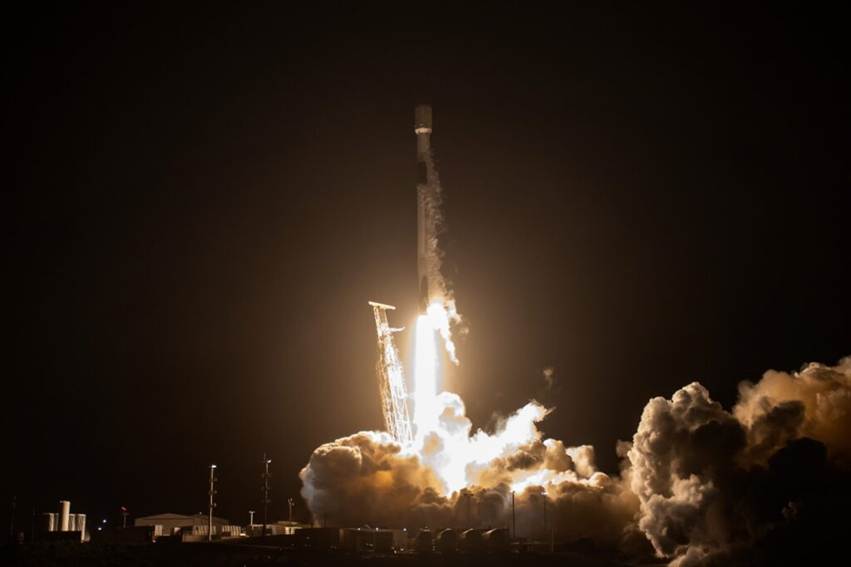
This has triggered the growth of a global ecosystem of companies competing to offer state‑of‑the‑art technology at competitive prices—from turnkey satellites and communication subsystems to specialised software. As a result, the cost of developing a space mission has fallen sharply, opening the door to creating a global CNS system.
Major technological developments, with Indra leading the way
This technological endeavour is highly complex. Startical has therefore relied on industrial partners, both in Spain and internationally, to manufacture the IOD‑1 and IOD‑2 satellites, with Indra overseeing validation. For the second demonstrator, Indra also developed the payload, including the high‑power VHF amplifier—a key component of the global space‑based CNS communication system.
Startical has not only developed new technologies but has also built on existing products, adapting them to this ambitious challenge. These include the GENIUS monitoring system, ADS‑B processing software already deployed in radar systems, the NEPTUNO recording system and VHF communication software.
Throughout this journey, we have not only developed cutting‑edge technologies but also strengthened the processes that position us as national leaders in the space sector. With the launch of Startical’s first two satellites, Indra is demonstrating both its ability to undertake complex space missions in record time and its pivotal role in enabling a global CNS system.
Startical’s constellation of more than 200 satellites will significantly enhance air traffic management worldwide, extending CNS (communication, navigation and surveillance) coverage—particularly across vast oceanic or remote regions that are currently out of reach of land‑based air navigation systems.
Recommended for you
Related Articles