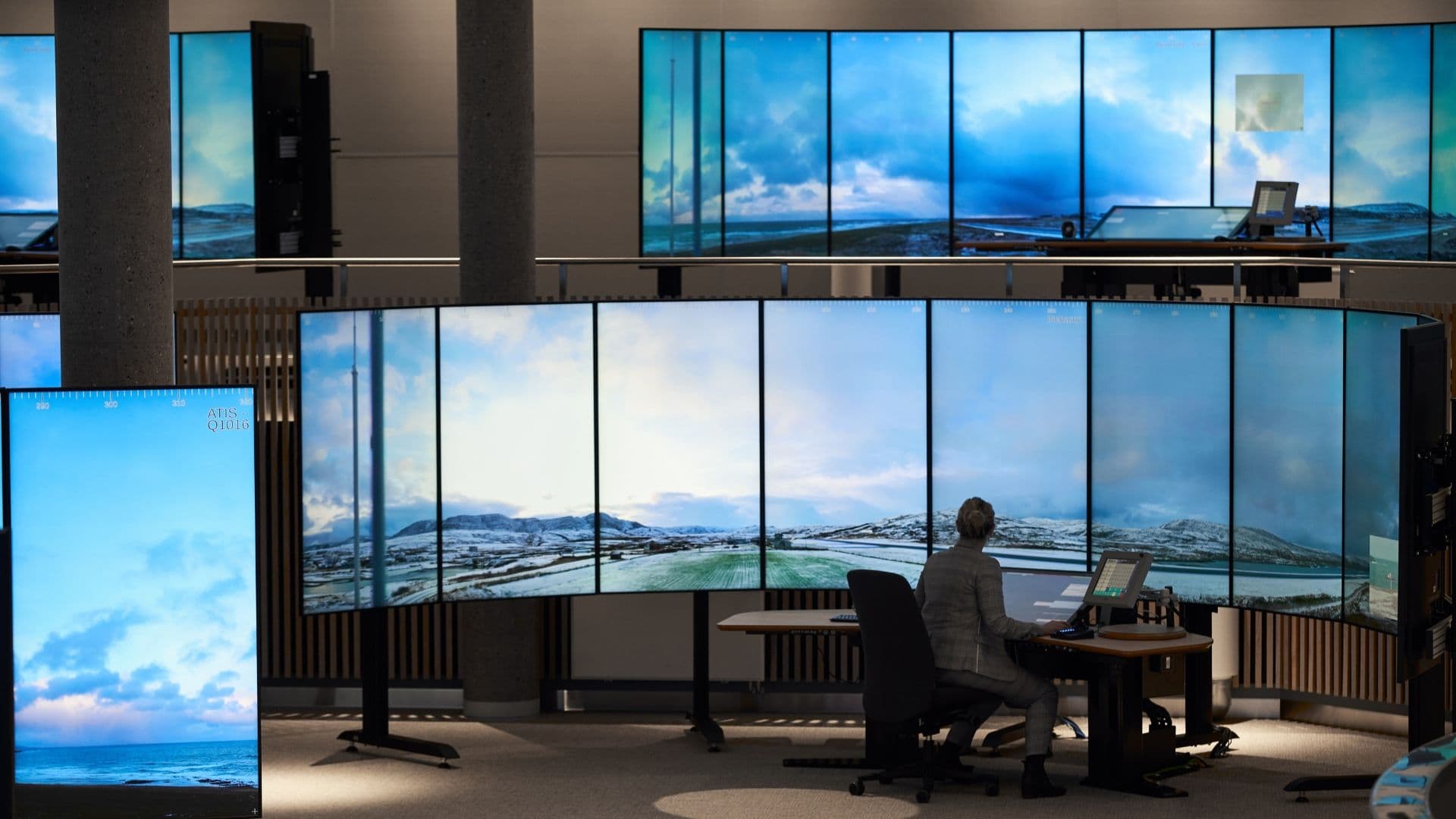
How the world’s largest remote digital tower centre operates
Located in the Norwegian city of Bodø, it remotely manages 14 aerodromes
5 reading time

Remote digital tower technology is revolutionising air traffic control operations, allowing air navigation service providers (ANSPs) to enhance operational efficiency, safety, and flexibility. From major international hubs to low-density regional airports, this technology delivers substantial benefits for diverse needs.
A remote tower centre in air traffic management is a facility that provides aerodrome control services (tower control) for one or more airports, but from a location different to the airport itself. It uses high-definition cameras, microphones, sensors, and digital technology to give controllers a complete, real-time view of the airport, as if they were in the physical tower. This enables safe and efficient air traffic management from a centralised location, even allowing multiple airports with low traffic to be controlled from a single centre.
Our advanced air traffic management systems, InNOVA (the most advanced tower system enabling controllers to manage multiple airports from a single integrated screen for maximum efficiency) and Garex voice communications control, power the world’s largest Remote Tower Centre (RTC), located in Bodø, Norway. This centre is designed to operate multiple airports and is the first in the world to do so.
Since 2019, the small city of Bodø, north of the Arctic Circle, has welcomed visits from air navigation service providers worldwide, eager to learn about Avinor’s Remote Tower Centre—a global benchmark in innovation. In collaboration with Avinor and Kongsberg Defence and Aerospace, Indra is the key technology provider for this centre.
Supporting Norway’s regional airports
Avinor manages 43 airports across Norway, forming one of Europe’s most extensive airport networks. Many of these airports serve small, remote communities where reliable air traffic is vital for essential services.
The Remote Tower Centre improves operational and cost efficiency, enabling Avinor to offer more flexible services and extend opening hours at low-density airports.
Avinor Remote Tower Centre: a global milestone
Since June 2025, 14 Norwegian airports have been operated remotely from this centre, with plans to reach 23 aerodromes by the end of 2027. The Bodø centre has 16 workstations, so expansion requires Avinor to implement multi-airport operations, making it the first ANSP in the world to do so.
Multi-airport operations allow each controller to manage up to three airports simultaneously from a single workstation. This enables Avinor to scale operations without a one-to-one ratio between controllers and airports—a key factor for scalability while maintaining safety, flexibility, and cost-effectiveness. If a controller needs to focus on one airport, others can be dynamically reassigned to another workstation.
InNOVA Digital: smart, scalable, and user-friendly ATM system
At the core of Indra’s Air Traffic Automation solution for Avinor’s RTC is InNOVA Digital, a customised ATM system for digital, remote, and contingency centres.
InNOVA Digital is a future-ready, scalable module of the InNOVA system, used at some of the world’s busiest airports such as Heathrow (UK), Dubai (UAE), and Incheon (South Korea). It integrates seamlessly with IRTOS, Indra’s advanced visual and augmented reality system for cutting-edge remote tower operations.
For Avinor’s RTC, InNOVA Digital includes all essential air traffic and airport control functions in a single, user-friendly interface:
- Air traffic situation display
- Electronic flight progress strips
- Meteorological informationControl and monitoring of airport equipment (AGL, emergency alarms, navigation aids)
- Control of Kongsberg’s camera system
- Support for multi-airport operations, integrating up to three airports per workstation
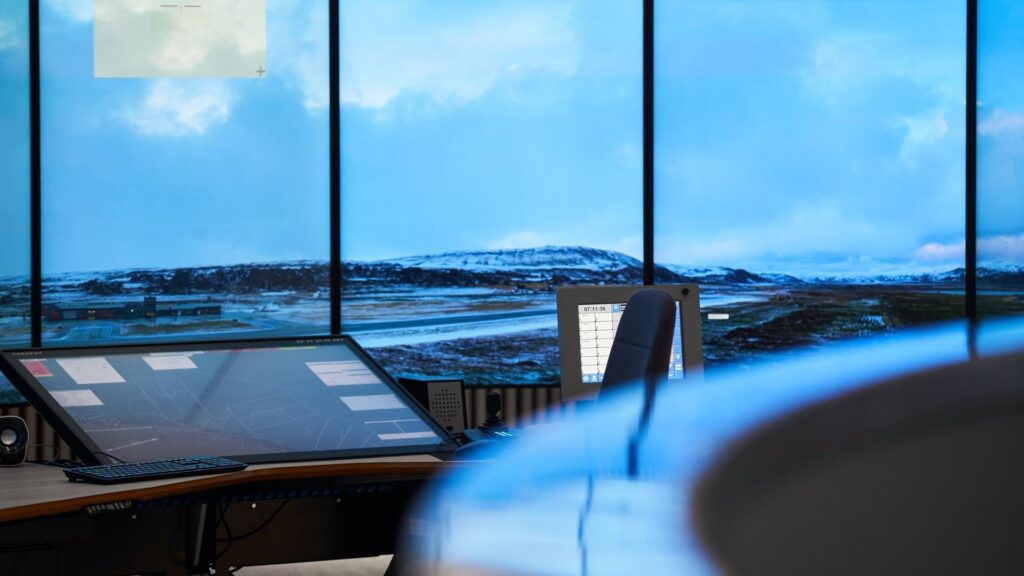
Indra Air Traffic works closely with Avinor experts to develop an intuitive interface. Each user can customise the display to their preferences and needs, greatly improving situational awareness and reducing workload—essential when managing multiple airports with simultaneous traffic.
Additionally, Indra has provided Avinor with the advanced InNOVA Supervisor Tool, enabling supervisors to plan and monitor operations and dynamically assign airports to workstations based on factors such as traffic load, simultaneous movements, type of traffic, and weather conditions.
Seamless communication with Garex VCCS
Reliable voice communication is essential. Avinor relies on Indra’s Garex VCCS system, a robust, proven solution ensuring smooth interaction between controllers, pilots, and airport staff.
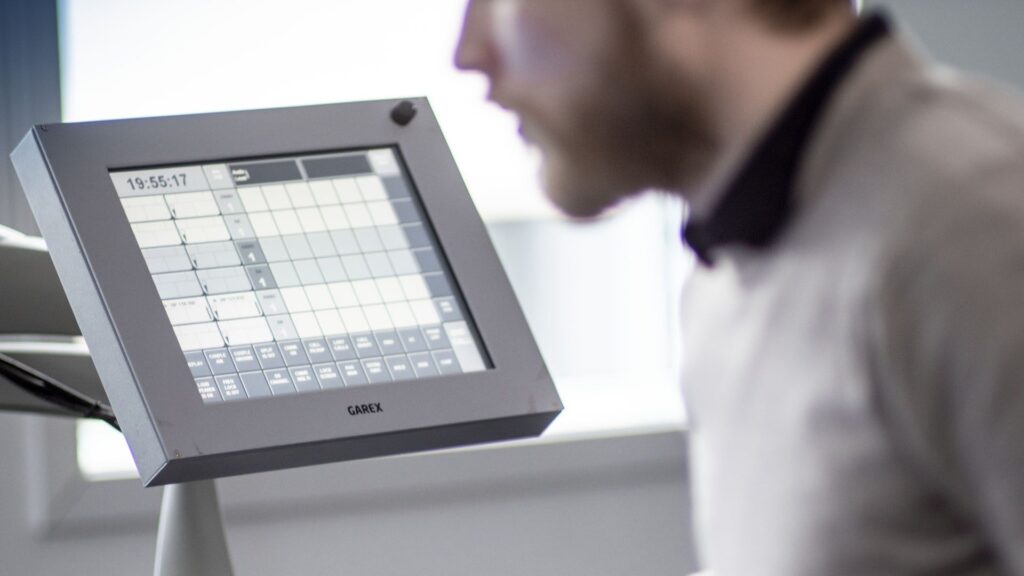
Garex VCCS offers high redundancy and reliability, an intuitive user interface, and easy integration with ATM systems. It automatically reconfigures with the correct frequencies and phone connections when airports are added or removed from a workstation.
Based on SESAR innovation
Our contribution to Avinor’s Remote Tower Centre is based on SESAR (Single European Sky ATM Research), Europe’s major air traffic management modernisation programme, which laid the foundations for remote tower concepts. Indra has turned this vision into real systems.
As part of SESAR, and in collaboration with Avinor and HungaroControl (Hungary’s ANSP), Indra plans and conducts operational validations of remote tower use, multi-airport operations, and the supervisor role, ensuring our solutions are operationally viable and aligned with European standards.
Driving the next generation of remote tower operations
Avinor’s Remote Digital Tower Centre represents a bold step towards the future of air traffic management. As the aviation industry embraces digital transformation, Indra remains committed to delivering innovative, scalable, and trusted solutions.
Pictures: © AVINOR
Norway’s unique geography makes regional air connectivity essential. Many of its airports serve small, remote communities along the coast, where reliable air traffic is vital for access to services such as healthcare. The Bodø Remote Digital Tower Centre improves operational and cost efficiency, enabling Norway’s air navigation service provider, Avinor, to offer a more flexible service and extend opening hours at these low-density airports.
Recommended for you
Related Articles

If satellite-based navigation is more efficient, why do conventional navaids remain essential?


UTM: why is a drone traffic management system necessary?


Startical: why transoceanic flights will become safer and more efficient


The world’s most advanced remote digital tower is in…


Linkia: A digital platform natively designed for a new era of air traffic management